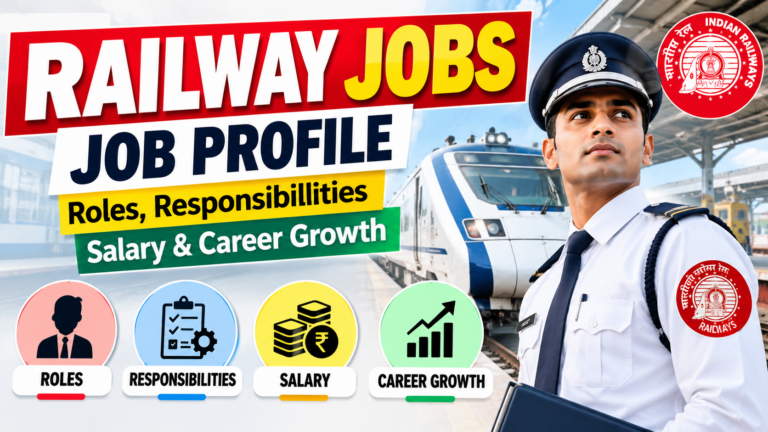
What the job actually looks like day to day, the salary you can earn, and how quickly you can progress in Indian Railways.
Clear a Railway Recruitment Board (RRB) examination, and you could begin your career in one of India’s largest public-sector organisations. Whether you have completed Class 10, Class 12 or graduation, Indian Railways offers different career opportunities based on your educational qualifications, technical skills and eligibility.
The job is not limited to checking tickets or working at a railway station. Depending on your post, you could manage train operations, assist locomotive pilots, maintain railway tracks, handle passenger services, process accounts or perform administrative duties. Each position comes with different responsibilities, working conditions and opportunities for promotion.
Here is what attracts lakhs of aspirants every year: a starting basic pay of ₹18,000 for Level 1 posts, ₹19,900 for Assistant Loco Pilot, and ₹25,500 to ₹35,400 for several popular NTPC posts. Applicable allowances, job stability and departmental promotion opportunities add to the overall career benefits. This guide covers the roles, responsibilities, salary and career growth to help you understand what awaits you after selection.
Key Takeaways
- Indian Railways recruits candidates through RRB examinations for technical, non-technical, operational and administrative posts.
- Major recruitment categories include NTPC, Group D, Assistant Loco Pilot and Technician.
- Starting basic pay varies by post, from ₹18,000 for Level 1 posts to ₹35,400 for several Level 6 NTPC posts.
- Employees may receive DA, HRA, Transport Allowance and other admissible benefits under applicable rules.
- Career progression depends on departmental vacancies, seniority, eligibility, service rules and departmental examinations where applicable.
- Roles and Responsibilities
Station Master: Supervises station operations, coordinates train movements and helps ensure safe and efficient railway operations.
Goods Train Manager: Performs operational duties associated with goods trains, including safety checks and coordination required for train movement.
Assistant Loco Pilot (ALP): Assists the Loco Pilot with locomotive operation, technical monitoring and compliance with prescribed safety procedures.
Commercial and Ticketing Staff: Handles passenger-related commercial activities, ticketing responsibilities and customer assistance, depending on the designation.
Junior Clerk and Accounts Staff: Maintains records, processes documents, handles data entry and supports administrative or financial operations.
Group D Staff: Performs assigned duties related to track maintenance, engineering support, workshops, electrical operations and other railway functions, depending on the post.
The exact responsibilities depend on the designation, department, railway zone and duty allocation.
- Railway Jobs Salary Structure
The salary depends on the post and its pay level under the applicable Seventh Central Pay Commission pay matrix.
| Recruitment Category / Post | Starting Basic Pay |
| Group D / Level 1 posts | ₹18,000 |
| Assistant Loco Pilot | ₹19,900 |
| NTPC Undergraduate, Level 2 posts | ₹19,900 |
| Traffic Assistant, Level 4 | ₹25,500 |
| Goods Train Manager, Level 5 | ₹29,200 |
| Station Master, Level 6 | ₹35,400 |
These figures represent basic pay, not the final in-hand salary.
What Makes Up the Monthly Salary?
Railway employees may receive:
- Basic Pay: The foundational component of monthly salary.
- Dearness Allowance (DA): Revised periodically under applicable government rules.
- House Rent Allowance (HRA): Determined by the applicable rules and posting location.
- Transport Allowance (TA): Payable according to the relevant entitlement.
- Other Benefits: Certain posts may qualify for additional admissible benefits, including duty-related allowances.
The final in-hand salary depends on the post, posting location, applicable allowances and deductions.
- Promotion and Career Growth
Indian Railways offers opportunities for career advancement through departmental promotion channels and other prescribed processes.
- Group D Employees: May become eligible for higher departmental posts, depending on service rules, vacancies and qualifying requirements.
- Assistant Loco Pilots: May progress to higher locomotive-operating positions after meeting the applicable experience, competency and selection requirements.
- Junior Clerks and Accounts Staff: May advance to higher clerical, accounts or supervisory positions.
- Station Masters: May progress to higher operational and supervisory positions according to the applicable service rules.
- Goods Train Managers: May become eligible for higher operational responsibilities through the prescribed departmental channels.
Promotions are not guaranteed after a fixed number of years. The actual timeline varies according to the cadre, vacancies, eligibility and departmental requirements.
- Work-Life Balance
Work-life balance varies significantly across railway posts.
Administrative and accounts positions may involve regular office duties. In contrast, Station Masters, Assistant Loco Pilots and other operational employees may work in shifts, including nights, weekends and holidays.
Group D employees may perform physically demanding duties depending on their assigned department. Certain technical and operational posts also involve strict safety procedures and medical fitness requirements.
Candidates should therefore compare the actual working conditions of their preferred posts instead of assuming that every railway job offers the same routine.